Wednesday, June 1, 2022

Bible Geek Word Nerd - the Aleph Beth

Beginning, but not at the beginning

June 1, 2022

We have been posting about the Beginning in the Genesis Text. This terrific article from Lois Tverberg will add colour to your understanding of not only the Genesis Text, but to all of Scripture.
 
 
"The rabbis asked the question, “Why do the Scriptures begin with the second letter of the alphabet rather than the first?” Their answer: “To show that the Scriptures do not answer every question, and not all knowledge is accessible to man, but some is reserved for God himself.”"

https://ourrabbijesus.com/articles/the-secrets-god-keeps/

Friday, May 27, 2022

Bible Geek Word Nerd - the Spirit

Beginnings - Spirit

May 27, 2022

“Now the earth was formless and empty, darkness was over the surface of the deep, and the SPIRIT OF GOD was hovering over the waters.”
 
וְהָאָ֗רֶץ הָיְתָ֥ה תֹ֙הוּ֙ וָבֹ֔הוּ וְחֹ֖שֶׁךְ עַל־ פְּנֵ֣י תְה֑וֹם וְר֣וּחַ אֱלֹהִ֔ים מְרַחֶ֖פֶת עַל־ פְּנֵ֥י הַמָּֽיִם׃
Genesis 1:2
 
The Bible is such a strange set of Texts, full of mystery and wonder and shocking imagery and poetic beauty. Like a diamond held up to light, the Bible throws off a mesmerizing display of stories and meanings that seemingly change with each reading. Well-trodden and familiar words can suddenly take on new power or majesty or significance unexpectedly simply by seeing those words from a slightly new perspective.
 
 That’s been our experience over the past few posts as we have explored the Hebrew text lying behind the familiar words of Genesis 1:1-2. And the terms we’re going to look at today can exemplify our point.
 
What is the “spirit of G-d”? And what did those words mean to the original audience for the Text? The Hebrew phrase in question is RUACH ELOHIM (ר֣וּחַ אֱלֹהִ֔ים). The word translated as “spirit” is RUACH (רוּחַ). It occurs 377 times in the Hebrew Bible, and most of the time it means wind or breath.
 
“I am going to bring floodwaters on the earth to destroy all life under the heavens, every creature that has the BREATH (RUACH) of life in it. Everything on earth will perish.” Genesis 6:17
 
“So Moses stretched out his staff over Egypt, and the LORD made an east WIND (RUACH) blow across the land all that day and all that night. By morning the WIND (RUACH) had brought the locusts…” Exodus 10:13
 
“When the days of your siege come to an end, burn a third of the hair inside the city. Take a third and strike it with the sword all around the city. And scatter a third to the WIND (RUACH). For I will pursue them with drawn sword.” Ezekiel 5:2
 
Most English translations of Genesis 1:2 use “spirit of G-d”, but not all of them do. For instance, the Jewish Publication Society’s translation of the Bible says that “a wind from G-d” hovered over the water (we shall address “hover” in another post).
 
It would be a grave error to imagine that the ancient author of the Genesis Text means “spirit” in the same way a modern reader might mean it. We moderns, biased by Platonist ideas and other philosophical concepts, bring to the Text much baggage that the authors of the Hebrew Bible never intended to include. To state the obvious, the ancients were attempting to describe an ineffable idea with concrete terms. Wind is only sensible in its effects: how it feels on our skin or how we see debris flying through the air. The wind is a great mystery.
 
Let us look to a great Jewish rabbi who discoursed on this very topic.
 
“Jesus answered, ‘Very truly I tell you, no one can enter the kingdom of God unless they are
born of water and the Spirit. Flesh gives birth to flesh, but the Spirit gives birth to spirit. You should not be surprised at my saying, “You must be born again.” The wind blows wherever it pleases. You hear its sound, but you cannot tell where it comes from or where it is going. So it is with everyone born of the Spirit.’” John 3:5-8 (NIV)
 
Jesus, undoubtedly speaking Hebrew to Nicodemus the Pharisee, doubtless used RUACH for Spirit and for wind as a clever wordplay (in a rare coincidence, this very Hebraic wordplay works in Greek, as well, where PNEUMA does double duty for wind and Spirit).
 
So where does this leave us? Here’s a thought experiment. Every time you feel a breeze or a strong wind, every time you see leaves tossing in the air, imagine that the wind has agency. G-d Himself moves the wind. An ancient book written from an ancient perspective contains many mysteries. If we walk too quickly past the words, we occasionally miss treasures hiding from us in plain sight.


Thursday, May 19, 2022

Bible Geek Word Nerd - Say what?

He said.  She said.

May 19, 2022

"The LORD said..." is a frequent expression from the Hebrew Bible. Interestingly, the word translated "said" comes from several Hebrew words which have subtly different meanings. In future posts we will explore AMAR (אָמַר), DAVAR (דָבַר), NAAM (נָאַם), NAGAD (נָגַד), PARAS (פָרַשׂ), and the many ways the Hebrew Bible speaks of speaking. It will be a thrill ride...as much as you could expect from a nerdy exploration of word nuances. 

Tuesday, May 17, 2022

Bible Geek Word Nerd - the Deep

Beginnings - the Deep

May 17, 2022

“Now the earth was formless and empty, darkness was over the surface of the DEEP, and the Spirit of God was hovering over the waters.”
 
וְהָאָ֗רֶץ הָיְתָ֥ה תֹ֙הוּ֙ וָבֹ֔הוּ וְחֹ֖שֶׁךְ עַל־ פְּנֵ֣י תְה֑וֹם וְר֣וּחַ אֱלֹהִ֔ים מְרַחֶ֖פֶת עַל־ פְּנֵ֥י הַמָּֽיִם׃
Genesis 1:2
 
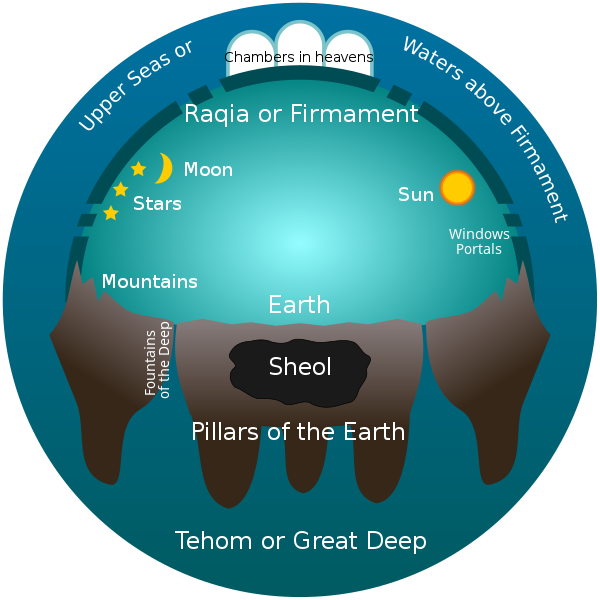
The Hebrew word translated as “the deep” is TEHOM (תְּהוֹם), a noun used more than thirty times in Jesus’ Bible. Knowing that the translators turn TEHOM into “the deep” is not, however, helpful to understanding the word’s real meaning to the Text’s original audience. To know its true meaning, we need a little tour of Ancient Near-Eastern cosmology and cosmogony. And understanding that is like a key which unlocks the meaning of all of Genesis 1.
 
Jewish cosmogony envisions a three-part world, with the heavens (SHAMAYIM) above, the land (ERETS) in the middle, and the underworld (SHEOL) below. Surrounding it all were cosmic waters (MAYIM), separated from the heavens and the land by a firmament (RAQIA). And below the land was the great deep (TEHOM), comprising the same waters that were above the firmament.


The Hebrew Bible does not innovate with this depiction, but rather adapts a model that other cultures in their Ancient Near Eastern world also held to be true. The Hebrew word TEHOM is a cognate of similar words that occur in Ugaritic (T-H-M) and Akkadian (TAMTU). All of these words are closely related TIAMAT, an early Sumerian goddess of the sea.
 
In the Enuma Elish, an ancient Babylonian creation epic, TIAMAT gives birth to the first deities, but she later takes on the form of a sea dragon and makes war on her children. She is then slain by MARDUK, who uses her carcass to form the heavens and the earth. 


In the Hebraic thinking of Genesis, it is G-d the Creator who forms the land – calls it into existence – not by destroying a rival god, but rather by His Word.

Monday, May 16, 2022

Bible Geek Word Nerd - Darkness

Beginnings: Darkness

May 16, 2022

“Now the earth was formless and empty, DARKNESS was over the surface of the DEEP, and the Spirit of God was hovering over the waters.”
 
וְהָאָ֗רֶץ הָיְתָ֥ה תֹ֙הוּ֙ וָבֹ֔הוּ וְחֹ֖שֶׁךְ עַל־ פְּנֵ֣י תְה֑וֹם וְר֣וּחַ אֱלֹהִ֔ים מְרַחֶ֖פֶת עַל־ פְּנֵ֥י הַמָּֽיִם׃
Genesis 1:2
 
In the primordial world of Genesis 1, where the land is TOHU and BOHU, it is also dark. In ancient near eastern thinking, these three factors (formless, empty, dark) are completely antithetical to life. For life to exist, there must be order and light.
 
The Hebrew word for “darkness” is CHOSHEK (חשֶׁךְ). Used 80 times in the Hebrew Bible, it means both darkness (as it does here in Genesis) and obscurity, conveying a sense of being hidden or even secret, as in Job 12: “He reveals the deep things of DARKNESS and brings utter darkness into the light.” (Hebrew has another word for “secret”, so this is a rare use.) Metaphorically, CHOSHEK can mean dread, terror, distress, confusion, or evil, just as “darkness” can in English. Consider:
  • Zephaniah 1:15 – “That day will be a day of wrath a day of distress and anguish, a day of trouble and ruin, a day of DARKNESS and gloom, a day of clouds and blackness…”
  • Micah 7:8 – “Do not gloat over me, my enemy! Though I have fallen, I will rise. Though I sit in DARKNESS, the LORD will be my light.”
  • Ecclesiastes 2:14 – “The wise have eyes in their heads, while the fool walks in the DARKNESS…”
  • Isaiah 5:20 – “Woe to those who call evil good and good evil, who put DARKNESS for light and light for DARKNESS, who put bitter for sweet and sweet for bitter.”
 
In Hebraic thinking, CHOSHEK is more than the opposite of OR (light). It is also the absence of good and the absence of order. Danger lurks in the darkness. We moderns with electric lights struggle to understand a world that could go pitch black – the dread that accompanies this. The CHOSHEK which was over the deep presents a world without the light of G-d where nothing can live but creatures of the dark.
 
Next, we will look at the word translated “deep” in the verse.

Thursday, May 12, 2022

Bible Geek Word Nerd - Empty

Beginnings: Empty

May 12, 2022

Part 2:
“Now the earth was FORMLESS and EMPTY, darkness was over the surface of the deep, and the Spirit of God was hovering over the waters.”
וְהָאָ֗רֶץ הָיְתָ֥ה תֹ֙הוּ֙ וָבֹ֔הוּ וְחֹ֖שֶׁךְ עַל־ פְּנֵ֣י תְה֑וֹם וְר֣וּחַ אֱלֹהִ֔ים מְרַחֶ֖פֶת עַל־ פְּנֵ֥י הַמָּֽיִם׃
Genesis 1:2
 
In our previous post, we discussed the Hebrew term TOHU (תֹּהוּ), translated above as “formless”. In this post, we will look at its rhyming partner, BOHU (בֹּהוּ), translated above as “empty”.
 
BOHU is a rarely used Hebrew noun, occurring only three times in the Text, and always paired with TOHU. Apart from Genesis, it is used in Isaiah 34 and Jeremiah 4.
 
In Isaiah 34, it is again paired with TOHU: “G-d will stretch out the measuring line of CHAOS (TOHU) and the plumb line of DESOLATION (BOHU)”. Clearly, the prophet is pointing his audience back to the beginning of creation, to the primordial state before G-d brings order to the creation. In context, he is describing G-d judgment and vengeance on the nations, the consequence of which will be desolation.
 
In Jeremiah 4, G-d’s wrath is not poured out on the nations, but rather on G-d’s people, as He brings disaster from the North. Beginning in verse 22, the LORD says, “My people are fools; they do not know me. They are senseless children; they have no understanding. They are skilled in doing evil; they know not how to do good.” The prophet continues in verse 23: “I looked at the earth, and it was FORMLESS and EMPTY; and at the heavens, and their light was gone. I looked at the mountains, and they were quaking; all the hills were swaying. I looked, and there were no people; every bird in the sky had flown away. I looked, and the fruitful land was a desert; all its towns lay in ruins before the LORD, before his fierce anger.”
 
To reiterate the point made in the previous post, TOHU and BOHU convey a state in which life cannot exist. Chaos. Disorder. Waste. Devastation. The authors of Isaiah and Jeremiah, as well as the author of Genesis, are trying poetically (using words that rhyme and are therefore more memorable to their audience) to portray a state which represents the absolute opposite of G-d’s creation. 
 
If you want words that describe the Hell of Gehenna from Jesus’ prophetic warnings, perhaps look no further than TOHU and BOHU


Wednesday, May 11, 2022

Bible Geek Word Nerd - Formless

 In the Beginning: formless

May 11, 2022 

“Now the earth was FORMLESS and EMPTY, darkness was over the surface of the deep, and the Spirit of God was hovering over the waters.”

וְהָאָ֗רֶץ הָיְתָ֥ה תֹ֙הוּ֙ וָבֹ֔הוּ וְחֹ֖שֶׁךְ עַל־ פְּנֵ֣י תְה֑וֹם וְר֣וּחַ אֱלֹהִ֔ים מְרַחֶ֖פֶת עַל־ פְּנֵ֥י הַמָּֽיִם׃

Genesis 1:2

Sticking with the theme of beginnings, let’s move onto the second verse in the Sacred Text, which gives us two of our favorite Hebrew words (favorite because they rhyme so pleasantly).

The earth was FORMLESS and EMPTY, say the NIV translators. The RSV has it “ without form and void”, which is close to the NLT’s “formless and empty”. The NASB renders those two as “a formless and desolate emptiness”. My favorite version of this verse, though, comes from the 19th century Emphasized Bible of JB Rotherham: “the earth had become waste and wild”.

Formless and empty. Waste and wild. What Hebrew words are behind these terms? They are two of my favorite because of their pleasing rhyme: TOHU (תֹּהוּ) and BOHU (בֹּהוּ). In this post, we will explore the first of these.

TOHU is a noun that occurs 20 times in the Hebrew Bible. It can mean formlessness, confusion, emptiness, and unreality.

In Deuteronomy 32, in the Song of Moses, TOHU describes the desert wilderness where G-d finds Israel and shielded him: “He found them in a desert land, in an EMPTY, HOWLING WASTELAND. (NLT)”


In 1 Samuel 12, Samuel is speaking to the people after they have asked for for King Saul. He says in verse 21: “Do not turn away after USELESS IDOLS. They can do you no good, nor can they rescue you, because they are USELESS.”

Isaiah used the word ten times, which the English translators of the NAS (to select one) render variously as “chaos” (24:10), “meaningless arguments” (29:21), “desolation” (34:11), “meaningless” (40:17), “emptiness” (41:29), and “confusion” (59:4).

So, clearly a word that does not easily carry over into English. The salient take-away is that TOHU seems to convey the absence of order, a place completely inhospitable to life. In the ancient near eastern theistic view of creation, the gods came to bring ORDER out of the primeval chaos in which the world began. Order allows life – and mankind – to exist and continue, to be “fruitful and multiply”.

But so many questions are left by the Text. Did G-d create the earth as “formless and empty”? Did something happen between verse 1 and verse 2, wherein the earth became “waste and wild”? The Hebrew Bible that Jesus read and memorized is a strange, wonderful, mysterious, and even dangerous Text. Read with care. Read with caution. Read with humility. Read with wise friends.

Next, we will look at the next word in our Hebrew “couplet”: BOHU.